
What participants told us
Participant evaluation · September 2026
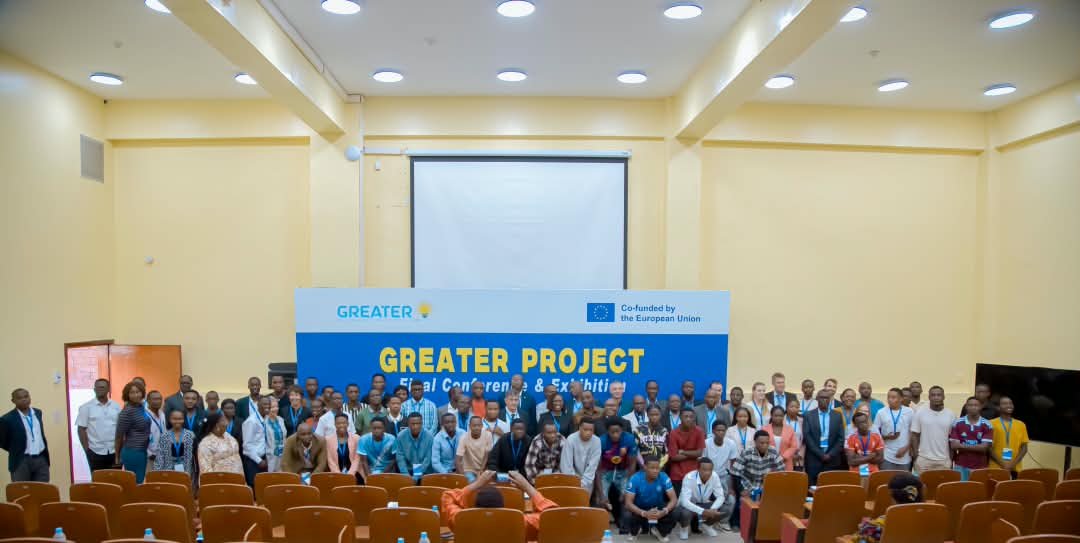
Seventeen participants completed the evaluation questionnaire of the Final Conference: 13 from Rwanda and 4 from Europe. Their feedback on GREATER’s contribution to renewable-energy education, applied learning and institutional capacity building was strongly positive.
- 17 participants answered the questionnaire: 13 from Rwanda and 4 from Europe
- 17/17 rated GREATER’s contribution to renewable-energy education and capacity building 4 or 5 out of 5
- 16/17 rated its contribution to students’ renewable-energy skills 4 or 5 out of 5
- 16/17 would like to keep cooperating with GREATER partners: 13 yes, 3 possibly
How participants rated GREATER
Ratings on a scale of 1 to 5, where 5 is the highest. Each bar shows all 17 answers.
Most frequent answers
Questions where participants could choose several answers. Each bar shows how many of the 17 respondents chose that answer; the most frequent answers are shown.
Where GREATER made the strongest contribution
Up to 4 answers each
Skills students strengthened
Up to 4 answers each
Results with the most lasting value
As many answers as wished
What will sustain the results
Up to 3 answers each
Areas for future cooperation
Up to 3 answers each
Interest in continued cooperation
One answer each
In their own words
Open-ended answers returned to three themes: preserve and use the Living Labs, continue practical skills training, and strengthen knowledge exchange and collaboration between Rwandan and European institutions. Participants also suggested student and staff exchanges, applied research, community energy solutions and cooperation with industry.
Recommended actions
- Keep Living Labs operational: assign local ownership, maintenance budgets and access arrangements.
- Embed project resources into teaching: use training materials and DIY Lab Kits in regular courses, with staff support.
- Prioritise follow-up partnerships: identify named institutional leads and feasible joint teaching, exchange or applied-research activities.
- Track actual use after closure: monitor Living Lab access, course integration, student participation and active collaborations.
Findings represent 17 self-selected respondents to the conference questionnaire. Questions with several possible answers can total more than 17. Ratings and expectations reflect participants’ perceptions; they are not independently verified outcomes and do not represent every GREATER beneficiary.